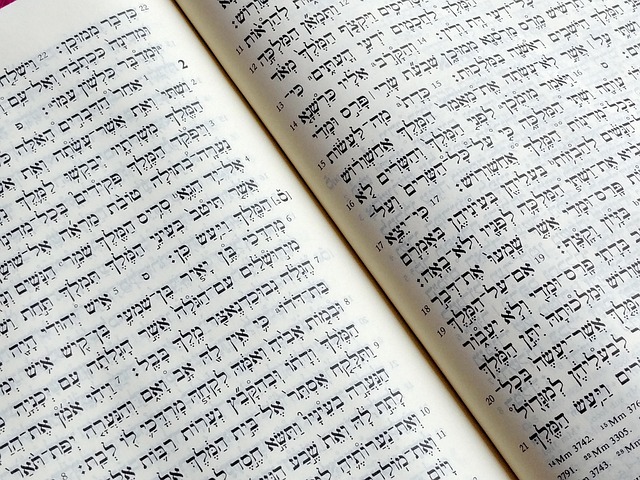
The Hebrew Bible and the Old Testament
The terms "Hebrew Bible" and "Old Testament" are often used interchangeably, but they represent distinct concepts within Judaism and Christianity. Understanding the differences between these two texts is essential for grasping the theological and historical contexts in which they exist.
What is the Hebrew Bible?
The Hebrew Bible, known in Hebrew as the Tanakh, is a collection of texts sacred in Judaism. It is divided into three main sections:
- Torah (Teaching or Law) - The first five books: Genesis, Exodus, Leviticus, Numbers, and Deuteronomy.
- Nevi'im (Prophets) - This section includes the historical accounts and prophetic writings.
- Ketuvim (Writings) - A diverse collection that includes poetry, philosophy, and historical narratives.
The Hebrew Bible is primarily written in Hebrew, with some portions in Aramaic. It serves as the foundational text for Jewish religious life, law, and identity.
What is the Old Testament?
The term "Old Testament" is used by Christians to refer to the same collection of texts found in the Hebrew Bible, but with some significant differences. The Old Testament is part of the Christian Bible and is typically divided into four main sections:
- Historical Books - These include narratives from the creation of the world to the history of Israel.
- Wisdom Literature - This section contains books like Psalms and Proverbs, focusing on moral and philosophical teachings.
- Prophetic Books - Similar to the Nevi'im in the Hebrew Bible, these texts contain the messages of the prophets.
- Apocrypha - Some Christian traditions include additional texts that are not found in the Hebrew Bible.
Christian versions of the Old Testament may vary in the number of books included, depending on the denomination. For instance, the Catholic Bible includes the Apocrypha, while most Protestant Bibles do not.
Key Differences
While both texts share many of the same books, there are notable differences:
- Terminology - Jews do not use the term "Old Testament," viewing it as pejorative. They prefer "Hebrew Bible" or "Tanakh."
- Order of Books - The order of the books differs between the two texts. The Hebrew Bible arranges its texts by category, while the Old Testament follows a chronological order.
- Translation Variations - The Hebrew Bible is based on the Masoretic Text, while Christian translations may use various source texts, leading to differences in interpretation.
- Theological Implications - The Old Testament is viewed through the lens of Christian theology, which includes the belief in Jesus as the Messiah, while the Hebrew Bible does not include this perspective.
Conclusion
In summary, while the Hebrew Bible and the Old Testament share many texts, they are distinct in their structure, terminology, and theological implications. Understanding these differences is crucial for anyone studying the religious traditions of Judaism and Christianity.
 thebrokenpixel

























 Pc Building Simulator 2 Steam
 Health
  Fitness
  Lifestyle
  Tech
Tech  Travel
  Food
Food  Education
  Parenting
  Career & Work
  Hobbies
  Wellness
  Beauty
  Cars
Cars  Art
Art  Science
  Culture
  Books
Books  Music
Music  Movies
  Gaming
  Sports
  Nature
  Home & Garden
  Business & Finance
  Relationships
  Pets
Pets  Shopping
  Mindset & Inspiration
  Environment
  Gadgets
  Politics