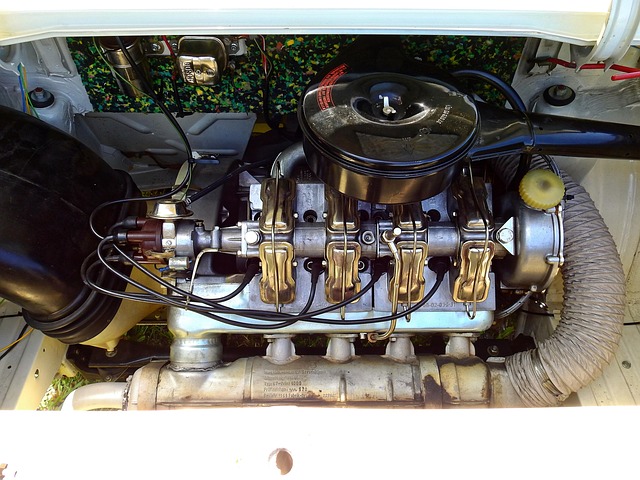
Internal Combustion Engine Industrial Revolution
The Birth of the Internal Combustion Engine
The internal combustion engine (ICE) is one of the most transformative inventions in human history, playing a crucial role during the Industrial Revolution. Its development marked a significant shift from steam power to a more efficient and versatile form of energy. The journey began in the early 19th century, with key innovators paving the way for modern engines.
Early Innovations
While the concept of combustion engines was floating around for decades, the first practical applications emerged in the early 1800s. In 1823, Samuel Brown patented the first internal combustion engine applied industrially in the United States. He didn't just stop there; he showcased his engine in a boat on the Thames in 1827 and even created an engine-driven carriage in 1828. Talk about ambition! 🚀
Fast forward to 1853, when Father Eugenio Barsanti and Felice Matteucci from Florence created what many consider the first real internal combustion engine. Their work laid the groundwork for future advancements, proving that innovation was in full swing.
The Evolution of Design
The design of internal combustion engines evolved rapidly. In 1794, Thomas Mead patented a gas engine, while Robert Street introduced an internal combustion engine that utilized liquid fuel, specifically petroleum. By 1798, John Stevens designed the first American internal combustion engine, showcasing the competitive spirit of inventors during this era.
In 1807, the Niépce brothers, Nicéphore and Claude, took things a step further by running a vehicle powered by an internal combustion engine. This was a pivotal moment, demonstrating the potential of this technology beyond stationary applications.
Impact on the Industrial Revolution
The internal combustion engine was a game-changer for industries. It allowed for the creation of more efficient machines, leading to increased productivity and reduced reliance on steam power. Factories could operate with greater flexibility, and transportation saw a revolution with the advent of automobiles and railways powered by these engines.
By the late 19th century, the automotive industry began to flourish. Pioneers like Karl Benz and Henry Ford capitalized on the internal combustion engine's potential, making personal transportation accessible to the masses. This shift not only transformed how people traveled but also reshaped urban landscapes and economies. 🏙️
Modern Applications and Future Prospects
Today, internal combustion engines are still widely used, although the landscape is changing with the rise of electric vehicles and alternative energy sources. However, the legacy of the ICE remains strong. It has powered countless innovations and continues to be a topic of research and development.
As we move into an era focused on sustainability, the challenge lies in improving the efficiency of internal combustion engines and reducing their environmental impact. Innovations in hybrid technology and biofuels are paving the way for a more sustainable future while still honoring the rich history of the internal combustion engine.
Conclusion
The internal combustion engine has undoubtedly played a pivotal role in shaping the modern world. From its humble beginnings to its status as a cornerstone of industrial innovation, it has changed the way we live, work, and travel. As technology continues to evolve, it will be fascinating to see how the legacy of the ICE adapts to meet the challenges of tomorrow.
 ehoto
ehoto 
























 Car Features Locked by Subscription
 Health
  Fitness
  Lifestyle
  Tech
Tech  Travel
  Food
Food  Education
  Parenting
  Career & Work
  Hobbies
  Wellness
  Beauty
  Cars
Cars  Art
Art  Science
  Culture
  Books
Books  Music
Music  Movies
  Gaming
  Sports
  Nature
  Home & Garden
  Business & Finance
  Relationships
  Pets
Pets  Shopping
  Mindset & Inspiration
  Environment
  Gadgets
  Politics