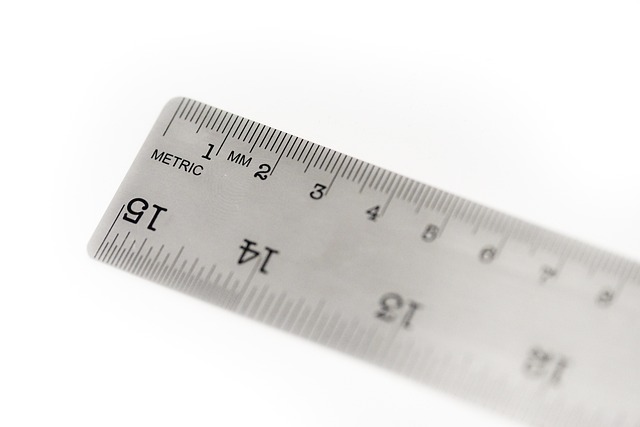
The Metric System Unit for Volume
The metric system, a universal language of measurement, is designed to provide clarity and precision in various fields, including science, education, and everyday life. Among its many applications, the measurement of volume stands out as a fundamental aspect, particularly represented by the liter. This article delves into the intricacies of the metric unit for volume, exploring its significance, conversion methods, and practical applications.
The Liter: The Standard Unit of Volume
In the metric system, the liter (L) serves as the primary unit of volume. Defined as the volume of one cubic decimeter, the liter is a versatile unit that is widely used across the globe. Its adoption facilitates easy communication and understanding of measurements, especially in scientific and culinary contexts.
Understanding Volume Measurement
Volume refers to the amount of space an object occupies, and measuring it accurately is crucial in various disciplines. The metric system simplifies this process by offering a coherent structure of units. The liter can be subdivided into smaller units, such as milliliters (mL), where one liter equals one thousand milliliters. This hierarchical structure allows for straightforward conversions and calculations.
Conversion Between Metric and Imperial Units
While the metric system is predominant in many countries, the imperial system is still in use, particularly in the United States. Understanding how to convert between these systems is essential for effective communication in a globalized world. For instance, one liter is approximately equivalent to 0.264 gallons, and conversely, one gallon is about 3.785 liters. Such conversions are vital for various applications, from cooking to scientific research.
Practical Applications of Volume Measurement
Volume measurement plays a significant role in numerous fields. In the culinary arts, precise measurements are crucial for achieving desired flavors and textures. Recipes often specify ingredients in liters or milliliters, ensuring consistency and quality. In scientific research, accurate volume measurements are essential for experiments and data collection, impacting the validity of results.
Exploring Other Metric Units of Volume
Beyond the liter, the metric system encompasses various other units of volume. For example, the cubic meter (m³) is a larger unit used for measuring substantial volumes, such as in construction or shipping. Understanding these units and their relationships enhances one’s ability to navigate the world of measurements effectively.
Conclusion
The metric system, with the liter as its cornerstone unit for volume, offers a structured and intuitive approach to measurement. Its widespread use and ease of conversion make it an invaluable tool in both everyday life and professional fields. By embracing the metric system, individuals can foster clearer communication and understanding in a world that increasingly values precision and accuracy.
 liora
liora 































 Individuality Vs Conformity
 Health
  Fitness
  Lifestyle
  Tech
Tech  Travel
  Food
Food  Education
  Parenting
  Career & Work
  Hobbies
  Wellness
  Beauty
  Cars
Cars  Art
Art  Science
  Culture
  Books
Books  Music
Music  Movies
  Gaming
  Sports
  Nature
  Home & Garden
  Business & Finance
  Relationships
  Pets
Pets  Shopping
  Mindset & Inspiration
  Environment
  Gadgets
  Politics