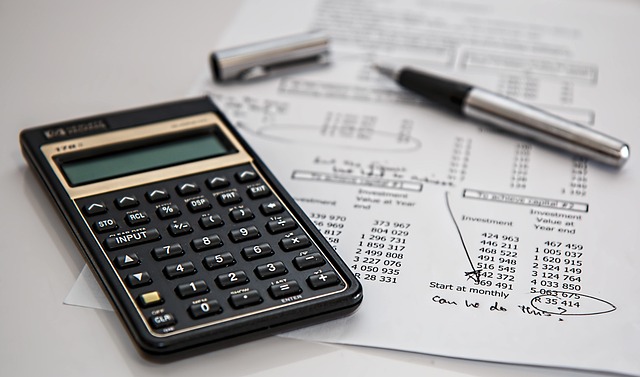
The Bakhshali Manuscript: A Glimpse into Ancient Mathematics
In the world of ancient texts, few discoveries have sparked as much interest as the Bakhshali Manuscript. Unearthed in 1881 by a peasant in the Bakhshali village of present-day Khyber Pakhtunkhwa, Pakistan, this manuscript is not just a dusty old relic; it’s a treasure trove of mathematical knowledge that dates back centuries. But what makes it so special? Let’s dive into the details!
A Brief History
The Bakhshali Manuscript, written in a form of literary Sanskrit, is believed to be one of the earliest known uses of the zero symbol. Yes, you read that right! Zero, the number that makes your bank account balance look a little less daunting, has ancient roots. The manuscript is thought to date back to around the 7th century, with some scholars suggesting it might be closely related to the works of renowned mathematician Bhaskara I from AD 629. Talk about a mathematical family tree!
What’s Inside?
So, what’s actually in this manuscript? The Bakhshali Manuscript is packed with mathematical problems, solutions, and even some early forms of algebra. Imagine a math textbook that’s over a thousand years old! The manuscript features various calculations that would make even today’s math whizzes scratch their heads. From simple arithmetic to more complex problems, it’s a testament to the advanced mathematical thinking of its time.
The Zero Symbol
Let’s take a moment to appreciate the zero symbol. Before the Bakhshali Manuscript, the concept of zero was not universally accepted. It was a bit like that one friend who always shows up late to the party—everyone knows they’re important, but it takes a while for everyone to realize it. The manuscript’s use of zero signifies a turning point in mathematical history, paving the way for future innovations and calculations.
Controversy and Confusion
Of course, with great discoveries come great debates. The dating of the Bakhshali Manuscript has been a topic of discussion among scholars. While some suggest it was written around the 7th century, others argue for a later date. This has led to a bit of a scholarly tug-of-war, with experts analyzing language, writing styles, and even the ink used. It’s like a math-themed episode of “CSI,” where everyone is trying to crack the case of the ancient manuscript!
Why It Matters
The Bakhshali Manuscript is more than just an ancient text; it’s a window into the mathematical thinking of the past. Understanding how ancient civilizations approached mathematics can provide valuable insights into the evolution of the subject. It’s also a reminder that the journey of mathematics is a collective effort, with contributions from various cultures over time.
Final Thoughts
Whether you’re a math enthusiast or just someone who appreciates a good historical tale, the Bakhshali Manuscript is a fascinating piece of our shared intellectual heritage. It challenges us to think about numbers in new ways and reminds us that sometimes, the simplest concepts—like zero—can have the most profound impact. So the next time you encounter a zero, give a little nod to the ancient mathematicians who paved the way for us. After all, without them, we might still be stuck counting on our fingers! 🧮
 ava.starr



















 Buddhist Philosophy on Suffering
 Health
  Fitness
  Lifestyle
  Tech
Tech  Travel
  Food
Food  Education
  Parenting
  Career & Work
  Hobbies
  Wellness
  Beauty
  Cars
Cars  Art
Art  Science
  Culture
  Books
Books  Music
Music  Movies
  Gaming
  Sports
  Nature
  Home & Garden
  Business & Finance
  Relationships
  Pets
Pets  Shopping
  Mindset & Inspiration
  Environment
  Gadgets
  Politics