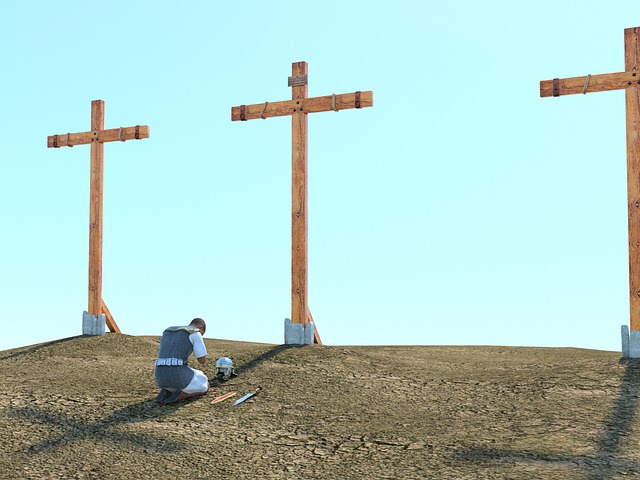
The Crucifixion of Jesus
The crucifixion of Jesus is one of the most significant events in Christian history, marking the culmination of his earthly ministry and the foundation of Christian belief. Occurring in the 1st century in Judaea, this event is not just a religious milestone but also a historical one, deeply rooted in the cultural and political context of the time.
What Happened During the Crucifixion?
Jesus was sentenced to death by crucifixion, a method of execution used by the Romans that involved nailing a person to a cross. The cross itself was a simple yet brutal instrument, typically made from two wooden beams forming a T-shape. This form of execution was reserved for the most serious crimes, and it served as a public spectacle to deter others from dissenting against Roman authority.
According to the New Testament, Jesus was crucified around AD 30 or AD 33. The four canonical gospels—Matthew, Mark, Luke, and John—provide accounts of the events leading up to his crucifixion, including his trial and the mocking he endured from soldiers and onlookers. A notable detail from the Gospel of John describes how soldiers divided his garments and cast lots for his seamless robe, highlighting the humiliation he faced even in death.
The Historical Context
Understanding the crucifixion requires a glimpse into the socio-political landscape of the time. Jesus was seen as a threat by both the Jewish religious leaders and the Roman authorities. His teachings challenged traditional beliefs and social norms, leading to increasing tensions that ultimately resulted in his arrest and execution. Scholars widely accept the historicity of the crucifixion, although details may vary among different sources.
The Aftermath of the Crucifixion
After Jesus' death, a soldier is said to have pierced his side with a spear to confirm that he was indeed dead. This act, traditionally attributed to a figure named Longinus, is significant as it symbolizes the finality of his sacrifice. The gospels report that blood and water flowed from the wound, which has been interpreted in various ways within Christian theology.
Why Does the Crucifixion Matter?
The crucifixion is central to Christian belief because it represents the ultimate sacrifice for humanity's sins. Christians believe that through Jesus' death, reconciliation with God is possible, offering salvation to all who believe. This event is commemorated annually during Holy Week, particularly on Good Friday, when Christians reflect on the suffering and sacrifice of Jesus.
Conclusion
The crucifixion of Jesus is more than just a historical event; it is a cornerstone of faith for millions around the world. It serves as a reminder of sacrifice, love, and the complexities of human nature. Whether viewed through a religious lens or a historical one, the crucifixion continues to resonate, prompting discussions about faith, morality, and the human experience. ✝️
 maxpower98
























 Iconic Songs From Movies
 Health
  Fitness
  Lifestyle
  Tech
Tech  Travel
  Food
Food  Education
  Parenting
  Career & Work
  Hobbies
  Wellness
  Beauty
  Cars
Cars  Art
Art  Science
  Culture
  Books
Books  Music
Music  Movies
  Gaming
  Sports
  Nature
  Home & Garden
  Business & Finance
  Relationships
  Pets
Pets  Shopping
  Mindset & Inspiration
  Environment
  Gadgets
  Politics