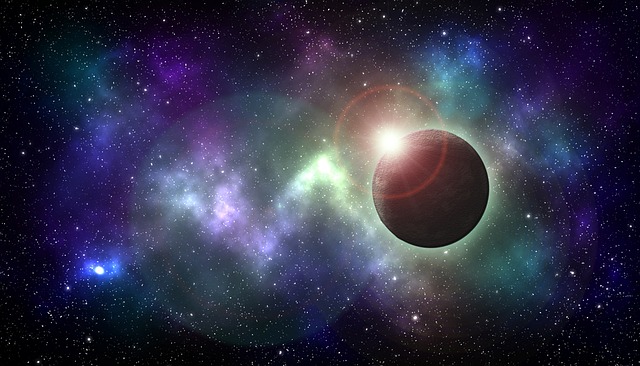
The Equation of State of Neutron Stars
Neutron stars are among the most fascinating objects in the universe, showcasing extreme conditions that challenge our understanding of physics. One of the key concepts related to neutron stars is their equation of state (EOS), which describes how matter behaves under the intense gravitational forces present in these stellar remnants. This article delves into the complexities of neutron stars and the significance of their EOS.
What is a Neutron Star?
A neutron star forms when a massive star exhausts its nuclear fuel and undergoes a supernova explosion. The core collapses under its own gravity, leading to a state where protons and electrons combine to form neutrons. This process results in a stellar object that is incredibly dense—so dense that a sugar-cube-sized amount of neutron-star material would weigh about as much as all of humanity combined! 🌌
The Nature of Neutron Stars
Neutron stars are the second most dense objects in the universe, surpassed only by black holes. The gravity on a neutron star's surface is so immense that it can accelerate infalling matter to speeds exceeding half the speed of light. This extreme environment leads to unique physical properties that are not observed elsewhere.
The Equation of State
The equation of state for neutron stars is crucial for understanding their structure and behavior. It describes how matter in a neutron star responds to changes in pressure and temperature. Unlike more familiar states of matter, such as gases or liquids, the EOS of neutron stars cannot be easily replicated in laboratories on Earth due to the extreme conditions involved.
Currently, the exact EOS for neutron stars remains unknown. However, it is believed that the matter behaves similarly to a degenerate gas, but with significant differences due to the overwhelming gravitational forces at play. General relativity must be taken into account, as Newtonian physics fails to accurately describe the conditions present in neutron stars.
Why is the EOS Important?
Understanding the EOS of neutron stars is essential for several reasons:
- Stellar Evolution: The EOS helps astronomers model the life cycles of stars, particularly how they evolve into neutron stars and ultimately into black holes.
- Gravitational Waves: Neutron stars are often involved in events that produce gravitational waves, such as neutron star mergers. The EOS plays a critical role in predicting the outcomes of these events.
- Fundamental Physics: Studying neutron stars can provide insights into the fundamental laws of physics, particularly in extreme conditions that cannot be replicated on Earth.
- Cosmic Phenomena: The EOS influences various cosmic phenomena, including pulsars and supernovae, making it a key factor in our understanding of the universe.
Current Research and Challenges
Researchers are actively working to develop models that can better describe the EOS of neutron stars. This involves complex calculations and simulations that take into account quantum mechanics and general relativity. Despite advancements, the challenges remain significant due to the unique nature of neutron-star matter.
As scientists continue to explore the mysteries of neutron stars, new observational data from telescopes and gravitational wave detectors will likely provide further insights into their EOS and the fundamental nature of matter itself. 🔭
Conclusion
The equation of state for neutron stars is a vital aspect of astrophysics, offering a window into the extreme conditions that exist in the universe. While much remains to be discovered, the ongoing research promises to deepen our understanding of these extraordinary celestial objects and the fundamental principles that govern them.



























 Your One-Stop Boat Parts Shop in Hull, MA
 Health
  Fitness
  Lifestyle
  Tech
Tech  Travel
  Food
Food  Education
  Parenting
  Career & Work
  Hobbies
  Wellness
  Beauty
  Cars
Cars  Art
Art  Science
  Culture
  Books
Books  Music
Music  Movies
  Gaming
  Sports
  Nature
  Home & Garden
  Business & Finance
  Relationships
  Pets
Pets  Shopping
  Mindset & Inspiration
  Environment
  Gadgets
  Politics