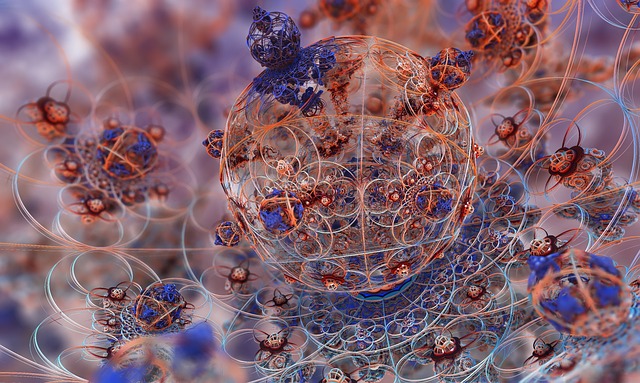
Hausdorff Dimension Measure
Understanding the Hausdorff Dimension
Mathematics can sometimes feel like a secret club with its own language, complete with symbols and theories that make most of us scratch our heads in confusion. One such concept that falls into this category is the Hausdorff dimension. It sounds fancy, doesn’t it? Like something you’d hear at a cocktail party for mathematicians, where the hors d'oeuvres are shaped like pi symbols. But fear not! This article will break it down into bite-sized pieces, like a math-flavored charcuterie board. 🧀
What is the Hausdorff Dimension?
The Hausdorff dimension was introduced by the mathematician Felix Hausdorff in 1918. It’s a way to measure the "roughness" or complexity of a set, particularly when it comes to fractals. You might be wondering, “What’s a fractal?” Well, think of it as a shape that looks similar at different scales. The classic example? The humble snowflake, which is unique yet exhibits self-similarity. ❄️
How Does It Work?
At its core, the Hausdorff dimension helps us understand how a space occupies dimensions. For example:
- A single point has a Hausdorff dimension of 0.
- A line segment? That’s a solid 1.
- A square, like your average piece of paper, flaunts a dimension of 2.
- And a cube, which is what we imagine when we think of a box, struts around with a dimension of 3.
But here’s where it gets interesting: fractals can have non-integer dimensions. This means that while they might look like they occupy a certain space, they can behave as if they exist in a higher dimension. Think of it as a sneaky mathematical trick! It’s like that one friend who can fit into any group, no matter the vibe. 🎉
Why Should We Care?
The Hausdorff dimension isn’t just a mathematical curiosity; it has practical applications in various fields, from physics to computer graphics. For instance, in the study of Brownian motion, which describes the random movement of particles, the Hausdorff dimension can help explain how these particles behave in two-dimensional space and beyond.
In simpler terms, it’s a tool that helps scientists and researchers understand complex systems in a more nuanced way. It’s like having a magnifying glass for the intricate patterns of our universe!
Final Thoughts
While the Hausdorff dimension may sound intimidating at first, it’s really just a way to quantify the quirks of shapes and spaces. So, the next time you find yourself gazing at a fractal pattern or even a simple snowflake, remember that there’s a whole world of mathematical wonder behind it. And who knows? You might just impress someone at that next cocktail party! 🍸
 jenny.b




















 Contemporary Romance Books 2024
 Health
  Fitness
  Lifestyle
  Tech
Tech  Travel
  Food
Food  Education
  Parenting
  Career & Work
  Hobbies
  Wellness
  Beauty
  Cars
Cars  Art
Art  Science
  Culture
  Books
Books  Music
Music  Movies
  Gaming
  Sports
  Nature
  Home & Garden
  Business & Finance
  Relationships
  Pets
Pets  Shopping
  Mindset & Inspiration
  Environment
  Gadgets
  Politics