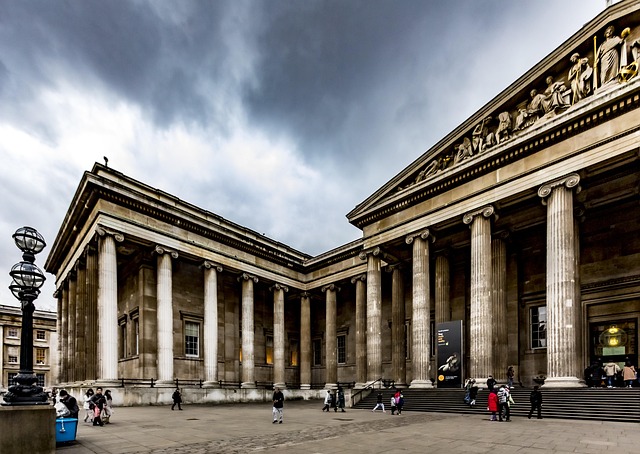
Influences on American Government
Influences on American Government
The roots of American government run deep into the soil of British political philosophy, like a stubborn weed that just won’t quit. The colonial period was a time of experimentation in democracy, where the Founding Fathers played around with ideas that would eventually shape the nation. So, what were the key influences that led to the establishment of this grand experiment we call democracy? Let's take a stroll through history, shall we?
The British Blueprint
To understand American government, one must first look across the pond to Great Britain. The British had their own set of rules and regulations that they were quite fond of, and these ideas trickled down to the American colonies. Think of it as a game of telephone, but instead of silly phrases, it involved concepts like representation, rights, and governance.
One of the most significant influences was the Magna Carta of 1215. This document was a revolutionary idea at the time, establishing that even the king wasn’t above the law. This notion of limited government and individual rights would later inspire American colonists to demand their own rights. Who knew a bunch of disgruntled barons could have such a lasting impact?
Colonial Experimentation
Fast forward to the 1600s and 1700s, and the American colonies were buzzing with political activity. Colonists began to experiment with their own forms of governance. Town meetings became the place to be, where citizens gathered to discuss issues, make decisions, and occasionally argue about who brought the best pie. These early democratic practices laid the groundwork for representative government.
- Self-Governance: Many colonies established their own assemblies, allowing colonists to have a say in local matters. This was like giving a kid a cookie jar and telling them they can only have one. It felt good to have a say, even if it was limited.
- Religious Dissent: Figures like Anne Hutchinson challenged the status quo, advocating for religious freedom and individual conscience. Her story shows that democracy isn’t just about politics; it’s about the freedom to think differently. And let’s be honest, who doesn’t enjoy a little healthy disagreement?
- Voting Rights: While voting was limited to white, landowning men, the debates about who should be allowed to vote began early. Today, discussions about extending voting rights to younger citizens, like 16- and 17-year-olds, echo these early conversations. It seems the youth have always had a voice, even if it was just a whisper back then.
The Legacy Continues
The influences of British governance didn't just fade away after the Revolution. They morphed and evolved, giving rise to a unique American political identity. The U.S. Constitution, with its separation of powers and checks and balances, is a direct descendant of these early British ideas. It’s like the ultimate remix of a classic song, where the original beats are still there, but with a fresh twist.
Modern discussions about democracy often reflect these historical debates. Issues like voter ID laws and the accessibility of polling places are contemporary echoes of the past. The ongoing conversation about who gets to participate in democracy is a reminder that this experiment is still very much in progress. 🎤
Conclusion
In conclusion, the influences on American government are a rich tapestry woven from British ideals and colonial experiences. The journey from monarchy to democracy was not a straight path; it was more like a winding road with plenty of potholes. Yet, the principles established during this time continue to resonate today. As the debate over voting rights and representation continues, it’s essential to remember the lessons learned from our colonial past. After all, democracy is a dish best served with a side of historical context!





















 The Role of Border Control Vehicles
 Health
  Fitness
  Lifestyle
  Tech
Tech  Travel
  Food
Food  Education
  Parenting
  Career & Work
  Hobbies
  Wellness
  Beauty
  Cars
Cars  Art
Art  Science
  Culture
  Books
Books  Music
Music  Movies
  Gaming
  Sports
  Nature
  Home & Garden
  Business & Finance
  Relationships
  Pets
Pets  Shopping
  Mindset & Inspiration
  Environment
  Gadgets
  Politics