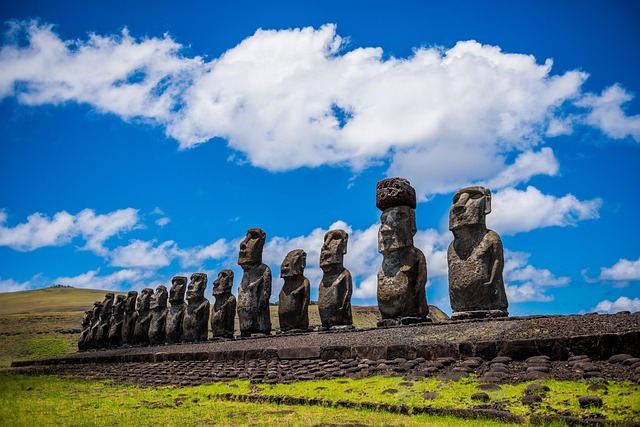
Moai Statues Easter Island
Introduction to Moai Statues
The Moai statues of Easter Island, or Rapa Nui, are some of the most iconic and mysterious monuments in the world. Carved from volcanic rock between 1250 and 1500 AD, these monolithic figures were created by the Rapa Nui people and are known for their distinctive features, including large noses, strong chins, and deep eye slits. 🌍
The Craftsmanship Behind the Moai
These impressive statues were primarily made from tuff, a type of volcanic rock, with some being crafted from basalt, trachyte, and red scoria. The majority of the Moai were carved at Rano Raraku, the main quarry on the island, where nearly half of the statues remain to this day. The builders used tools made from harder stones to shape the Moai, and once completed, the statues were polished with pumice to achieve a smooth finish.
Transporting the Moai
After carving, the Moai were transported to various ceremonial sites around the island, known as ahu. This process was quite an engineering feat, as the statues can weigh several tons. While the exact methods of transport are still debated, it is believed that the Rapa Nui people used a combination of sledges and ropes to move these massive figures.
Symbolism and Cultural Significance
The Moai hold significant cultural value for the Rapa Nui people. They are thought to represent ancestral figures, embodying the spirits of important ancestors who were believed to provide protection and guidance to the community. The placement of the Moai on ahu platforms often signifies a hierarchy, with the most important figures being positioned in prominent locations. 🏛️
Recent Discoveries
In recent years, archaeological efforts have uncovered previously uncategorized finds in the Easter Island museum, including eye fragments that suggest some Moai were originally designed with carved eye sockets. This indicates that the Moai were not just static figures but were part of a more dynamic ceremonial practice, possibly with a selective hierarchy among the Rapa Nui.
Visiting Easter Island
For those interested in experiencing the Moai up close, Easter Island is accessible via flights from mainland Chile. Visitors can explore various sites where the Moai are located, including the famous Ahu Tongariki, which features the largest number of standing Moai. The island's unique culture, combined with its stunning natural beauty, makes it a fascinating destination for travelers. 🌊
Conclusion
The Moai statues of Easter Island are not only remarkable examples of ancient craftsmanship but also vital symbols of the Rapa Nui culture. Their presence continues to intrigue scholars and tourists alike, sparking curiosity about the history and traditions of this remote island.
 aju
aju 


















 Remote Start Installation
 Health
  Fitness
  Lifestyle
  Tech
Tech  Travel
  Food
Food  Education
  Parenting
  Career & Work
  Hobbies
  Wellness
  Beauty
  Cars
Cars  Art
Art  Science
  Culture
  Books
Books  Music
Music  Movies
  Gaming
  Sports
  Nature
  Home & Garden
  Business & Finance
  Relationships
  Pets
Pets  Shopping
  Mindset & Inspiration
  Environment
  Gadgets
  Politics